Dead Weight in the Database: How Stale Contacts Are Quietly Destroying Your Bulk Campaign Economics
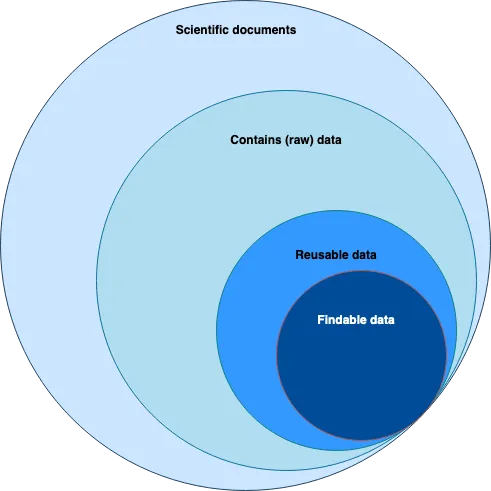
Photo: Dasapta Erwin Irawan, Arif Susanto, and Suryantini, CC0, via Wikimedia Commons
There is a particular kind of waste that does not announce itself. It does not throw errors. It does not trigger alerts. It simply sits inside your contact database, consuming send volume, degrading aggregate engagement metrics, and quietly inflating the cost-per-result on every campaign you run. The industry term for this phenomenon is subscriber churn—but that label undersells the problem. Churn implies a departure. What we are discussing here is something more insidious: contacts who never formally left, but who stopped participating long ago.
For developers building or maintaining bulk communication infrastructure, this is not a marketing problem. It is an engineering problem with direct financial consequences.
What Silent Churn Actually Looks Like
Active subscriber churn—unsubscribes, hard bounces, explicit opt-outs—is visible and manageable. Most platforms handle it automatically. The dangerous variant is the kind that leaves no trace in your logs.
Consider the following scenarios:
- An email address that was valid two years ago now routes to a dormant inbox that no one monitors.
- A mobile number was reassigned by the carrier after the original subscriber ported away.
- A business contact changed roles, and the corporate address now silently discards external communications.
- A user created a throwaway account to claim a promotional offer and has never opened a message since.
In each case, your platform records a successful delivery. No bounce code. No complaint. Just silence. Multiply that across tens of thousands of contacts and you have a list that looks healthy on paper but performs like it is half-empty.
The Financial Arithmetic of Sending to Nobody
The cost calculation is straightforward once you make it explicit. Most bulk messaging platforms—whether SMS, email, or push—charge on a per-message or per-contact basis. If 30 percent of your list is functionally unreachable, you are paying for that 30 percent on every single send.
But the direct cost is only part of the equation. The indirect costs are often larger:
Deliverability degradation. Email and SMS carriers assess sender reputation in part by engagement ratios. A list with high open and click rates signals a healthy sender. A list dragged down by thousands of non-responders signals the opposite—and carriers respond by throttling, filtering, or deprioritizing your traffic across the board, including to the contacts who would have engaged.
Spam trap exposure. Recycled email addresses—former real inboxes that ISPs have converted into honeypots—are disproportionately common in aging lists. Hitting even a small number of these can cause significant reputation damage that takes months to reverse.
Inflated A/B test baselines. When inactive contacts constitute a substantial portion of your test population, statistical conclusions become unreliable. Optimization decisions built on corrupted data compound over time.
Detection Strategies for the Non-Obvious
Identifying silent churn requires going beyond standard bounce tracking. The following signals are worth instrumenting directly into your platform or auditing periodically:
Engagement decay curves. Track the last interaction timestamp for every contact—open, click, reply, conversion. Segment contacts by recency: 30 days, 90 days, 180 days, 365 days, and beyond. The distribution of that curve tells you far more about list health than aggregate open rates.
Soft bounce frequency. A single soft bounce is unremarkable. A contact that soft-bounces across three or more consecutive sends is exhibiting a pattern consistent with a degraded or abandoned address.
Carrier number validation. For SMS-heavy operations, TCPA compliance already provides a strong incentive to run contact numbers through carrier lookup APIs periodically. These same lookups will surface disconnected lines, reassigned numbers, and VoIP substitutions that inflate your reachable list count.
Engagement scoring models. Assign each contact a rolling score based on recency, frequency, and depth of interaction. Contacts whose scores fall below a defined threshold enter a re-engagement queue rather than receiving full campaign traffic.
List Hygiene as an Engineering Practice
List hygiene is often treated as a periodic manual task—something the marketing team handles before a major campaign. That framing is insufficient for teams operating at scale. Hygiene should be a continuous, automated process embedded in the send pipeline itself.
A practical architecture might include:
-
Inbound validation at the point of capture. Syntax checks and domain MX record verification for email; carrier lookup for mobile. Prevent bad data from entering the system rather than cleaning it downstream.
-
Automated suppression triggers. Define rules that move contacts to a suppressed state based on behavioral signals—consecutive non-opens, repeated soft bounces, engagement scores below threshold—without requiring manual review.
-
Scheduled re-engagement sequences. Before suppressing a long-dormant contact permanently, route them through a dedicated re-engagement flow. These sequences serve a dual purpose: they recover genuinely dormant but recoverable contacts, and they generate the final behavioral signal needed to justify permanent suppression.
-
Audit logging for suppression decisions. Maintain a record of why each contact was suppressed and when. This is operationally useful for debugging, and it is relevant for compliance documentation under frameworks like CAN-SPAM and TCPA.
Quantifying the ROI of a Clean List
The business case for aggressive list hygiene is not difficult to construct. Consider a platform sending 500,000 messages per month at a blended cost of $0.008 per send. If 25 percent of the list is functionally inactive, that represents 125,000 messages per month—roughly $1,000 per month—generating zero return. Over a year, that is $12,000 in direct send costs alone, before accounting for the downstream deliverability impact on the remaining 75 percent.
For enterprise-scale operations, the numbers scale accordingly. A list of five million contacts with similar churn characteristics represents waste measured in six figures annually.
The more consequential figure, however, is the deliverability improvement that follows a serious cleaning effort. Teams that have undertaken rigorous list audits consistently report meaningful increases in open rates, click-through rates, and conversion rates among the retained contacts—not because those contacts changed, but because the suppression of dead weight improved the platform's sender reputation and, by extension, the inbox placement rate for everyone on the list.
Building the Habit Before the Problem Compounds
The contacts sitting dormant in your database today were not always liabilities. They were, at some point, real people who expressed genuine interest. The systems that allowed them to accumulate without review are the problem—not the contacts themselves.
For builders maintaining bulk communication infrastructure, the practical imperative is to treat list health as a first-class engineering concern: monitored continuously, governed by defined rules, and reviewed on a regular cadence. The alternative is a database that grows in volume while shrinking in value—and a cost structure that quietly expands to match.