Three Layers Down: How Recursive DNS Failures Silently Collapse Bulk Messaging Infrastructure
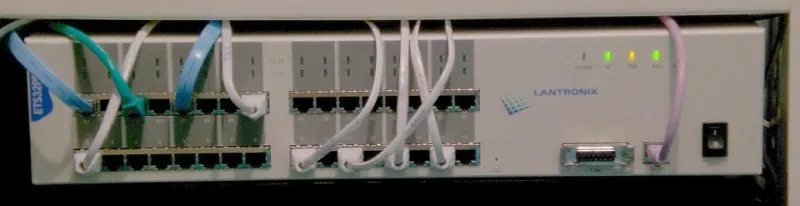
Photo: Crispmuncher, CC BY 3.0, via Wikimedia Commons
At 2:17 PM on a Tuesday, a mid-sized e-commerce platform in Atlanta triggered a flash sale notification campaign to 400,000 opted-in subscribers. By 2:21 PM, delivery had stalled. The platform's internal dashboard showed green across every status indicator. Their messaging provider's status page reported nominal operations. No alerts fired. No tickets were opened automatically.
The actual failure had occurred at a DNS resolver operated by a subcontractor three tiers removed from the messaging provider — a company the Atlanta team had never heard of, whose name appeared nowhere in any vendor contract.
This is the DNS cascade problem, and it is far more common than the industry acknowledges.
What DNS Resolution Actually Looks Like in Production
Most developers understand DNS at a surface level: a domain name gets translated into an IP address, and traffic flows. What that mental model omits is the layered delegation structure that governs how modern DNS resolution actually works at scale.
When your bulk messaging platform makes an outbound API call to a delivery provider, that call initiates a resolution chain. Your system queries a resolver. That resolver may query an authoritative nameserver. That nameserver may itself delegate authority to another provider. Each hop represents a dependency — and each dependency represents a failure surface that belongs to someone else.
Large messaging providers frequently outsource DNS infrastructure to specialized operators. Those operators, in turn, may rely on upstream resolvers or anycast networks managed by yet another vendor. By the time a single domain lookup completes, four or five distinct organizations may have participated in producing that answer.
Under normal conditions, this architecture is invisible. Caching smooths over latency. Redundant resolvers absorb localized failures. The system works, and no one thinks about it.
Then something upstream breaks.
The Green Dashboard Problem
What makes DNS cascade failures particularly damaging for bulk communication operations is the way they interact with standard monitoring tooling.
Most platform-level health checks validate that an endpoint is reachable and responding. They do not independently verify that the DNS resolution path supporting that endpoint remains intact end-to-end. If your monitoring infrastructure uses the same resolver chain as your production traffic — which it typically does — a cascade failure will disable both your messaging and your ability to detect that messaging is disabled, simultaneously.
The result is the scenario described above: green dashboards, stalled campaigns, and an operations team that has no automated signal pointing toward the actual problem.
This is not a hypothetical edge case. DNS outages at major providers have cascaded across dozens of dependent platforms within minutes. The 2021 Fastly outage, while primarily CDN-related, illustrated precisely how quickly failures propagate through shared infrastructure layers that most engineering teams treat as background assumptions rather than active dependencies.
Bulk messaging systems are acutely vulnerable to this dynamic because they depend on rapid, repeated resolution of delivery endpoint domains at high volume. A single failed lookup in a low-traffic application might cause one user to see an error. A failed lookup in a bulk send pipeline can halt tens of thousands of messages per minute.
How Recursive Lookups Compound Failure Risk
The recursive nature of DNS amplifies the blast radius of any single-node failure. When a resolver cannot answer a query from cache, it begins walking the delegation tree — querying root servers, then top-level domain authorities, then authoritative nameservers for the specific domain. Each step introduces latency and a new failure point.
Under normal load, this recursion completes in milliseconds. Under failure conditions — a degraded nameserver, a network partition, a misconfigured TTL that expired cache entries prematurely — recursive lookups can time out entirely. And because bulk messaging platforms issue resolution requests at volume, a slow recursive lookup doesn't just delay one message. It occupies connection pool resources, backs up send queues, and can trigger upstream timeout logic that marks entire delivery routes as unavailable.
Engineering teams often observe this failure mode as a sudden spike in timeout errors rather than explicit DNS failure codes. The actual root cause gets buried beneath layers of application-level error handling that was never designed to surface infrastructure dependency failures with this level of specificity.
Architectural Responses Worth Implementing
The appropriate response to DNS cascade risk is not paranoia — it is deliberate architectural design that treats DNS as a first-class dependency rather than invisible plumbing.
Operate independent resolver infrastructure. Rather than relying exclusively on your hosting provider's default resolver, configure your bulk messaging systems to use multiple independent resolvers from different vendors. Public options like Cloudflare's 1.1.1.1 and Google's 8.8.8.8 operate on separate anycast networks with distinct upstream relationships. Routing resolution queries across multiple independent resolvers means a single-provider failure does not halt all lookups.
Implement IP-level fallback for critical endpoints. For the delivery provider endpoints your platform contacts most frequently, maintain a separately updated registry of resolved IP addresses. When DNS resolution fails or times out, a fallback to known-good IPs — validated and refreshed on a scheduled basis — can preserve partial send capacity while resolution infrastructure recovers. This approach requires operational discipline to keep IP records current, but for high-stakes campaigns, the engineering investment is justified.
Instrument DNS resolution latency as a primary metric. Most observability stacks monitor HTTP response times and application-layer errors. Relatively few track DNS resolution time as a distinct signal. Integrating DNS latency monitoring into your existing dashboards provides early warning of degradation before full resolution failures materialize. A resolver that normally answers in five milliseconds but has climbed to 200 milliseconds is telling you something important.
Conduct dependency mapping exercises. Ask your messaging providers directly: who operates your DNS infrastructure? Who are your upstream resolver dependencies? Document the answers. You will likely discover relationships you did not know existed, and that knowledge will make your incident response substantially faster when failures occur.
Test failure scenarios explicitly. Chaos engineering principles apply here. Periodically blocking DNS resolution for specific provider domains in a staging environment and observing how your platform responds will reveal whether your fallback logic actually works — before a production incident forces you to find out.
The Accountability Gap in Layered Infrastructure
There is a broader organizational issue embedded in this technical problem. When a failure occurs three layers deep in infrastructure you do not own, contract, or monitor, accountability becomes genuinely murky. Your messaging provider may be entirely truthful when they report no incidents on their end. Their subcontractor's subcontractor failing does not appear on their status page because they are not monitoring it either.
This is the nature of modern infrastructure dependency chains. The systems that power bulk communication at scale are assemblages of dozens of vendor relationships, many of which are invisible to the businesses relying on them.
Engineering teams that accept this reality and build accordingly — with redundant resolution paths, IP-level fallbacks, independent monitoring, and explicit failure testing — are substantially more resilient than those that treat their provider's green status page as a complete picture of system health.
The DNS cascade is not an exotic failure mode reserved for catastrophic events. It is a routine risk embedded in the architecture of every bulk messaging platform operating today. The question is not whether your resolution chain will experience degradation — it is whether your system will detect it, route around it, and keep sending when it does.