Asynchronous Deception: How Message Queues Create a False Reality Between 'Sent' and 'Delivered'
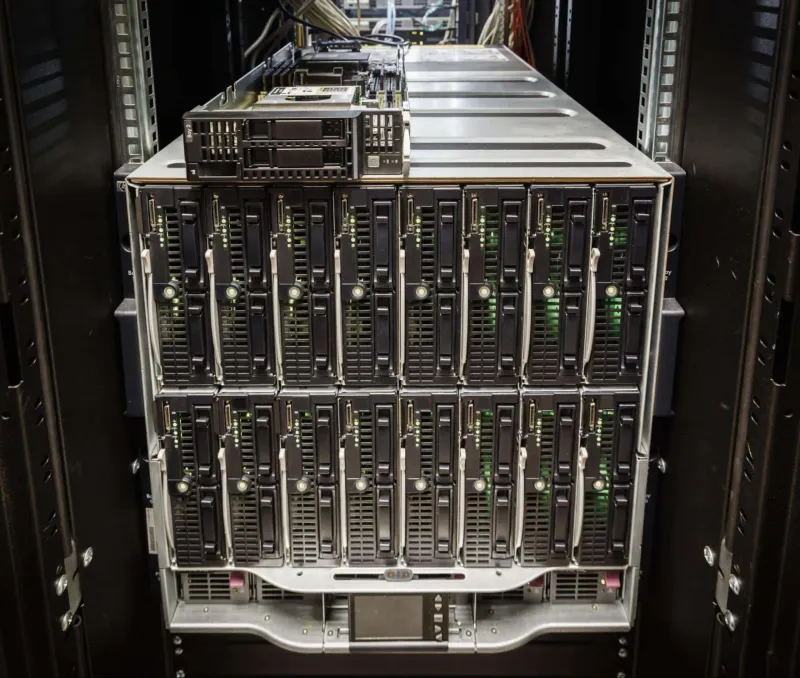
Photo: server queue data pipeline processing infrastructure technology, via www.fivetk.com
There is a particular kind of operational confidence that comes from watching a bulk send complete. The progress bar reaches one hundred percent. The dashboard updates. The status column fills with green checkmarks. For most developers and operations teams, that moment feels like the end of the story.
It is frequently the beginning of a problem they will not discover for hours.
The status your platform displays as "Sent" is, in most modern bulk messaging architectures, a confirmation of nothing more than a successful handoff to an internal queue. The message has left your application layer. It has not left the building. Understanding the distance between those two facts is essential for any builder operating bulk communication infrastructure at meaningful scale.
What 'Sent' Actually Confirms
Modern bulk messaging platforms are built around asynchronous processing for good reason. Synchronous delivery — waiting for each message to complete before acknowledging the next — does not scale. A campaign pushing fifty thousand SMS notifications cannot afford to block on each individual carrier acknowledgment. So platforms accept messages into a queue, confirm the intake, and process delivery in the background.
This architecture is sound. The problem is not asynchronous processing itself. The problem is the gap between what the system confirms and what operators assume that confirmation means.
When your API call returns a 200 status or your dashboard marks a record as sent, you are receiving confirmation of queue acceptance. The message now lives somewhere between your application and the carrier network, in one or more intermediate processing layers that your dashboard was never designed to expose. Whether it exits those layers in two seconds or two hours depends on factors your monitoring system is almost certainly not tracking.
The Anatomy of a Phantom Queue
A typical bulk messaging flow passes through more processing stages than most developers realize. After your application submits a message, it enters the platform's intake queue. From there, it moves to a routing layer that selects a carrier path. It then enters a carrier submission queue, waits for rate-limit windows to open, gets handed to the carrier's own ingestion infrastructure, and finally moves through the carrier's internal delivery pipeline before reaching the handset.
Each of those stages is a potential accumulation point. Under normal load, messages move through them quickly enough that the delay is imperceptible. Under elevated load — a campaign launch, a product alert triggered by a high-traffic event, a scheduled send that coincides with another client's campaign on shared infrastructure — any of those stages can become a bottleneck.
The intake queue fills faster than the routing layer can drain it. The routing layer backs up waiting for carrier rate windows. Carrier submission queues hold messages while the network handles upstream congestion. At each point, messages sit. And at each point, your dashboard continues to report them as sent.
When Delay Destroys Value
For many bulk messaging use cases, a ten-minute delivery delay is a minor inconvenience. For others, it is a complete failure.
Consider a fraud alert system that notifies cardholders of suspicious transactions. A notification that arrives forty-five minutes after the triggering event is not a late alert — it is a useless one. The transaction has already been approved or declined. The customer has already called support. The window for action has closed.
The same logic applies to appointment reminders sent within an hour of a scheduled time, one-time passcodes with short expiration windows, flash sale notifications tied to inventory that depletes quickly, and emergency alerts where response time is operationally critical.
In each of these cases, a message that your dashboard reports as sent — and that was, technically, accepted into a queue — may have arrived too late to accomplish anything. Your metrics show a successful campaign. Your users experienced a failure.
Why Standard Monitoring Misses This Entirely
Most bulk messaging dashboards are instrumented to capture intake events, not delivery events. This is partly a technical constraint — true delivery confirmation requires a closed feedback loop from the carrier network back to your platform, and that loop is imperfect even when it exists. It is also partly an incentive problem. Platforms have limited commercial motivation to surface data that reveals how long messages sat in their own infrastructure before moving.
The result is that operators are frequently working with incomplete information presented as complete information. A "sent" status with a timestamp reflects when the message entered the queue, not when it left it. A delivery confirmation, where it exists at all, may reflect carrier acceptance rather than handset delivery. The phantom queue — the space between those two events — is largely invisible to standard tooling.
Building Visibility Into the Gap
The engineering response to this problem requires treating queue depth and transit latency as first-class operational metrics rather than afterthoughts.
At the platform level, developers should push for access to intermediate status data wherever the API supports it. Many major SMS and push notification platforms expose webhook events for carrier submission, carrier acceptance, and handset delivery as distinct states. Collapsing those into a single "sent" status is a dashboard design choice, not a technical inevitability. If your current tooling conflates them, it is worth evaluating whether the platform can surface more granular event data.
At the infrastructure level, synthetic monitoring provides a reliable ground-truth mechanism. Sending test messages through your actual production stack on a scheduled interval — and measuring the elapsed time between submission and confirmed receipt — gives you a real-time picture of queue health that no platform dashboard will provide. When that latency begins to climb, you have early warning of a developing backlog before it affects your live campaigns.
At the operational level, time-sensitive message categories should be treated as architecturally distinct from general bulk sends. Fraud alerts and OTPs should not share queue infrastructure with promotional campaigns. Priority routing, dedicated sending pools, and explicit rate-limit headroom are not luxuries for high-stakes notification types — they are engineering requirements.
The Accountability Gap
There is a broader accountability issue embedded in how bulk messaging platforms communicate delivery status to their customers. When a platform reports a message as sent at 2:14 PM and the recipient receives it at 2:47 PM, the platform's metrics show on-time delivery. The operator's users experienced a thirty-three-minute delay. Both statements are simultaneously true, and only one of them appears in the report.
Builders who operate bulk communication systems at scale need to own the measurement of that gap independently. Relying on platform-reported metrics to evaluate platform performance is a structural conflict of interest that consistently produces optimistic data. The only reliable way to know what your recipients are actually experiencing is to measure it yourself, from outside the system, using infrastructure you control.
The Queue Is Not the Destination
Asynchronous messaging architecture is not going away, nor should it. The throughput gains it enables are real and necessary for bulk communication at scale. But the operational visibility that organizations build around that architecture needs to reflect what asynchronous processing actually means for message timing.
A message in a queue is not a message delivered. A dashboard showing "Sent" is not a dashboard showing "Received." The distance between those two states — invisible to most monitoring systems, consequential to most time-sensitive use cases — is where phantom queues live and where bulk communication campaigns quietly fail.
Measuring that distance is not optional. It is the difference between operating a bulk messaging system and merely believing you are.